Tiny3TPU
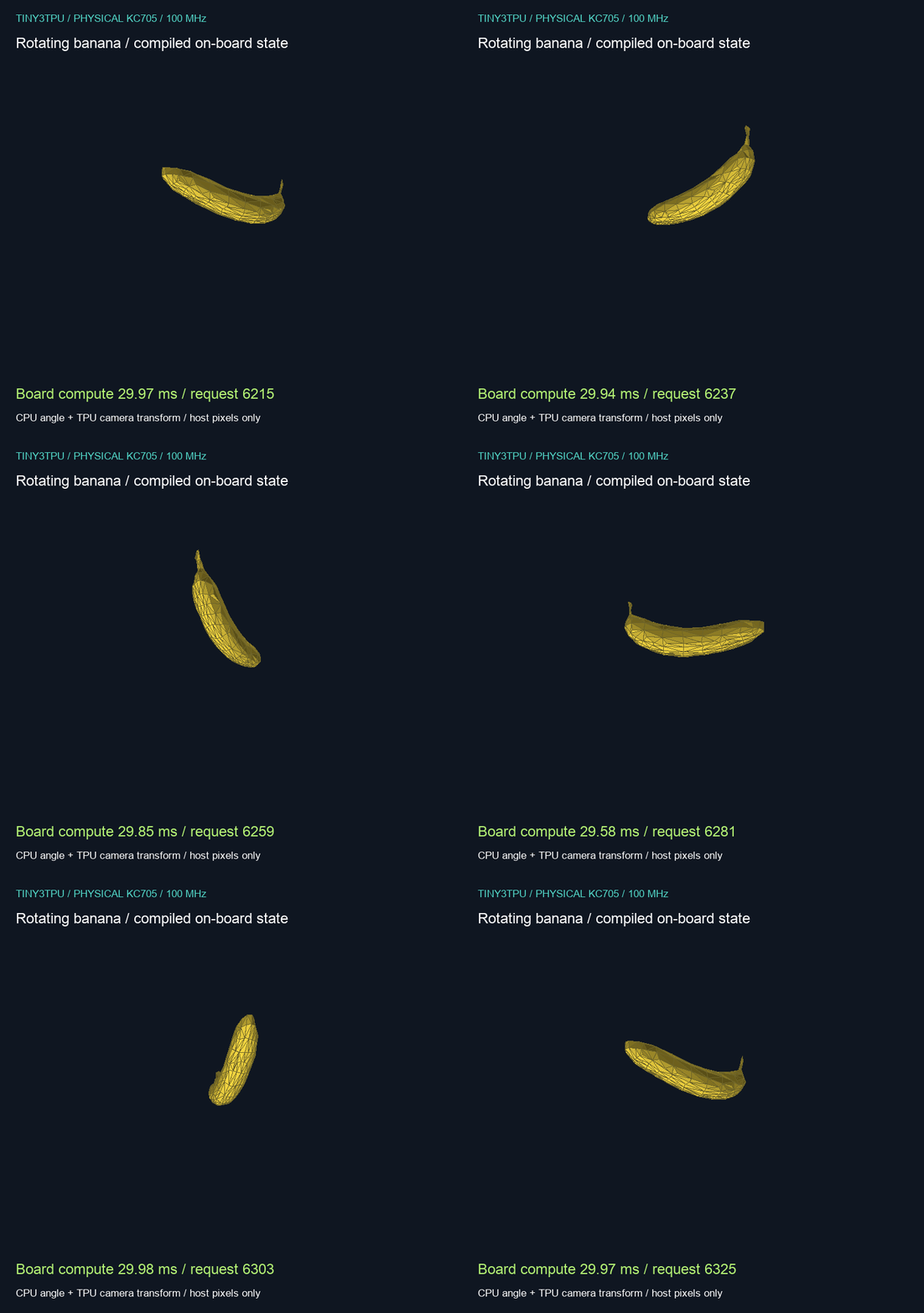
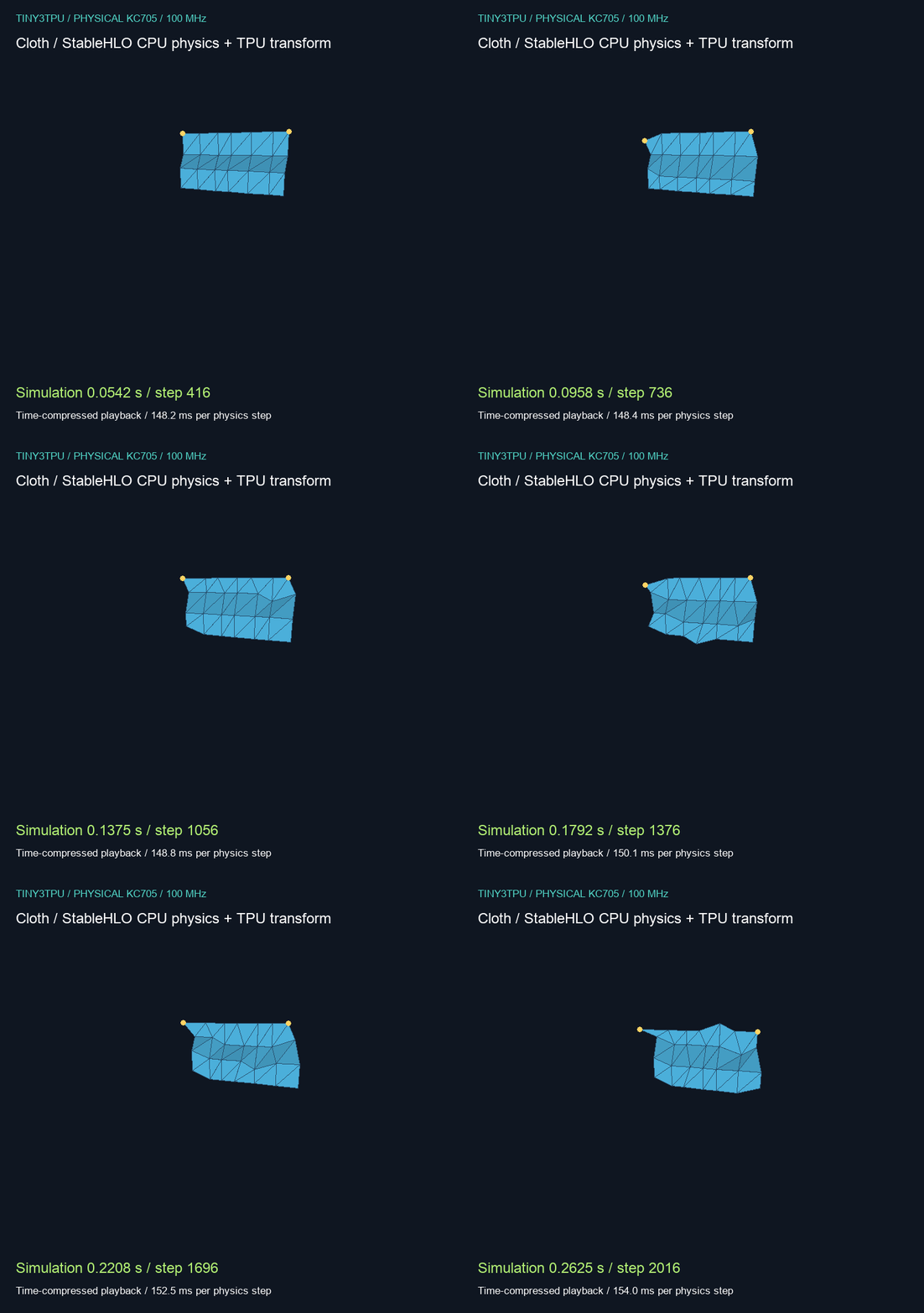
Started with a matrix multiply. Built the little computer around it: a RISC-V CPU, two systolic cores, a compiler, and firmware. These demos ran on a KC705 with 64 KiB of on-chip RAM. It now renders directly to a display over HDMI.
SPI matrix accelerator
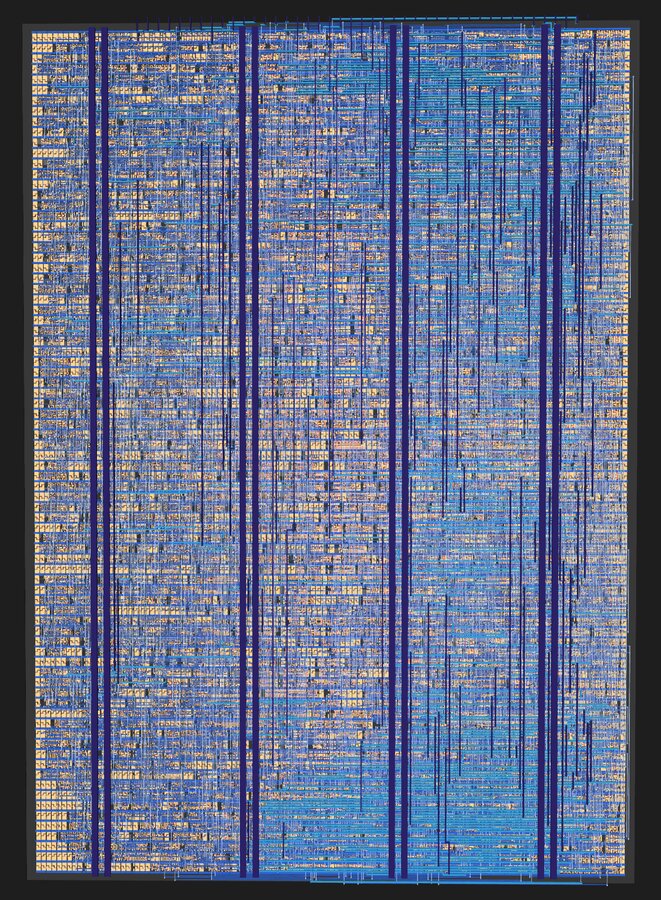
A tiny matrix accelerator that speaks SPI. Two lanes multiply 4×4 matrices using unsigned 8-bit inputs and ternary weights: add, subtract, or skip. The compute takes 32 cycles, before SPI transfer overhead.
ProsperityHDL
Taking a spiking-neural-network accelerator from a paper into RTL. The idea is to find shared spike patterns and reuse their work across 128 processing elements. A single-tile research prototype, with sparse execution and MNIST checks in simulation.
Synapse32
SRA-VJTI's five-stage RV32IMA core in Verilog, with forwarding, hazard handling, and Sv32 virtual memory. The SoC has a timer, UART, and interrupt controller; its Verilator flow can boot OpenSBI and Linux with an interactive serial console.
Ray tracing in C
Starting with gradients and vector math, then getting a sphere onto the screen. Camera rays, sphere intersections, surface normals, and a sky gradient, written straight to a PPM file in C.

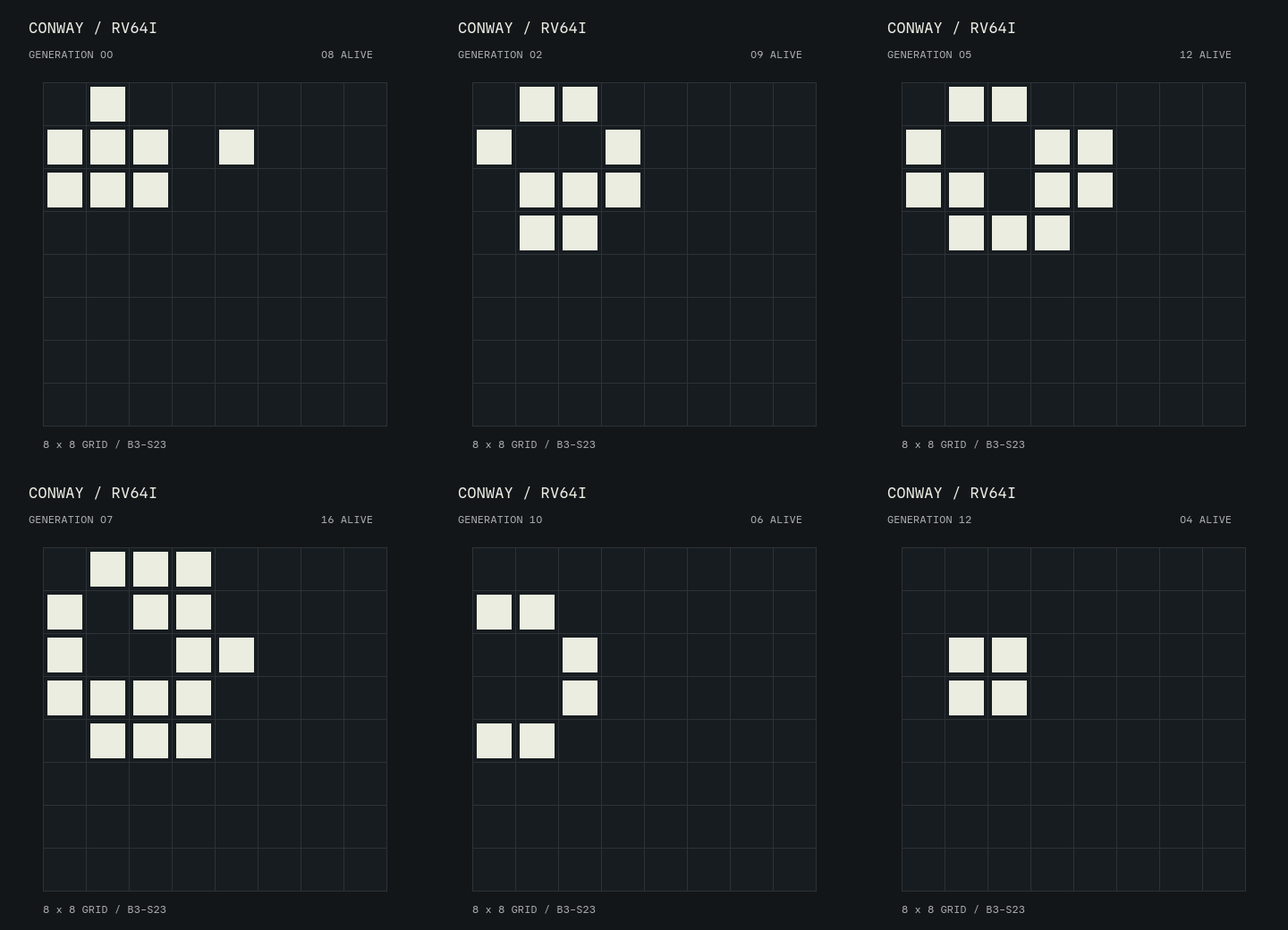
Conway in RISC-V assembly
Conway's Game of Life on an 8×8 grid, written in RISC-V assembly. VT100 cursor control redraws the terminal as the pattern evolves. Assembled and run with Spike or QEMU.